When Asphalt Needs Removal and Replacement in Danville and Roxboro
Asphalt needs to be removed and replaced when the damage has reached the base underneath it, not just the surface. If you own a driveway or lot around Danville, VA or Roxboro, NC, the pattern of damage tells you most of what you need to know. Isolated problems on sound pavement can usually be patched or overlaid. Widespread failure usually cannot.
Signs damage may go deeper than the surface
Look at the whole drive, not one crack. Interconnected cracks that form a web (often called alligator cracking) suggest the layers under the surface are moving. Patches that keep coming back in the same spot point the same way, because the repair is fixing a symptom while the cause stays put.
Sinking areas and soft spots deserve close attention. If a section dips, feels springy underfoot, or leaves a rut under normal traffic, the base beneath may have lost its strength. Standing water after a rain often marks the same places, and water sitting on asphalt works its way into cracks and softens what supports them.
Cracks alone do not prove the base has failed. A few straight, narrow cracks on an otherwise firm surface are common on older pavement and are often handled with crack filling. What matters is the pattern and how much of the drive it covers.
- Likely surface wear: isolated cracks, light fading, small rough patches, firm ground underfoot.
- Possible deeper trouble: connected cracking across large areas, dips that hold water, soft or spongy spots, repeated patches in the same place.
When a patch, overlay, or full replacement fits
Each fix suits a different level of damage. The right one depends on how much of the pavement is sound and what is happening below it.
| Option | Best fit | What it needs to work |
|---|---|---|
| Patch | Localized damage, such as a pothole or a small broken area | Surrounding pavement that is firm and stable |
| Overlay | Worn surface with minor cracking across a drive that is otherwise solid | An existing pavement and drainage that can support a new layer |
| Full-depth replacement | Widespread damage, sinking, or a base that has failed | Removal of the asphalt and a rebuilt base |
Patching
Patching suits damage that stays in one place. Asphalt repair and patching cuts out the bad area and fills it so the surrounding pavement keeps carrying the load. If the ground around the patch is also soft, the patch will not hold for long.
Overlay
An overlay adds a new asphalt layer over the old one. It works when the old pavement is still a sound foundation. Cracks and weak spots underneath tend to show through again, so asphalt resurfacing and overlays are for surface wear, not for a failing base.
Full-depth replacement
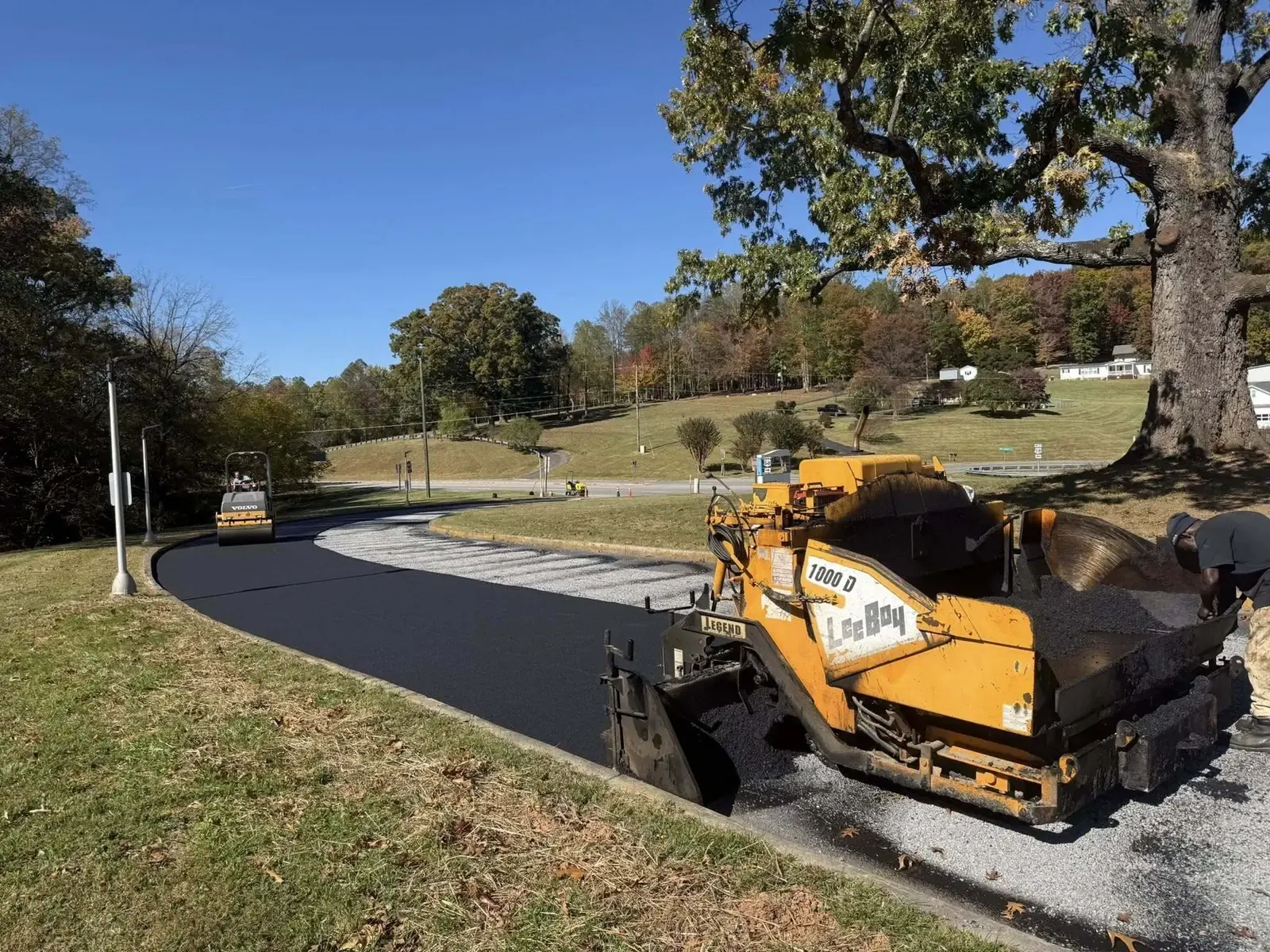
Full-depth replacement means we remove the asphalt and rebuild the supporting layers before paving again. The base is the compacted stone under the asphalt, and it does the real work of carrying weight and shedding water. When it has failed, a new surface over it will fail too. That is the job asphalt removal and replacement is meant for. If you are weighing the money side, our post on asphalt repair vs replacement cost covers what drives the price.
What November and December weather can reveal
Virginia and North Carolina winters usually bring rain, colder nights, and freeze-thaw cycles. Water gets into cracks, freezes, expands, and thaws, and weak pavement shows it quickly. A drive that looked acceptable in September can show new cracking or low spots after a few cold, wet weeks.
That makes November and December a useful time to watch your pavement. Notice where water collects after a rain and where it runs across the drive instead of off it. Water that pools or flows across the surface makes cracks and soft areas worse, so drainage is part of any honest assessment.
Properties in Danville and Roxboro are not all alike. A shaded drive, a sloped drive, and a flat lot behind a building each handle water differently. If your yard is clay, or your drive climbs to the street, those conditions matter. Judge your pavement by its actual condition rather than assuming the fix your neighbor used fits yours.
What to note before choosing the repair
Walk the drive after a rain and take notes before anyone gives you a recommendation. A few specifics make the evaluation faster and more accurate:
- Mark where cracks connect to each other instead of running alone.
- Note any patch that has failed or been redone more than once.
- Find the spots that dip, feel soft, or hold water after rain.
- Check whether water runs toward the street, the yard, or the garage.
Then ask two questions. Is the damage limited to the asphalt, or does it reach the base? And what preparation does each option require? A repair that skips base work on a failed base only delays the bigger job.
The clearest answer comes from someone standing on the pavement. We offer a free estimate, and we can compare patching, an overlay, and full-depth replacement for your drive or lot.
Common questions
How do I know if my asphalt driveway needs full replacement?
Look for widespread connected cracking, sunken or soft areas, and puddles that return after every rain. If patches keep failing in the same places, the base is the likely problem and replacement is worth a close look.
Is asphalt resurfacing better than replacement?
Resurfacing is better only when the existing pavement and base are still sound, since it covers surface wear. If the base has failed, the overlay tends to crack and sink again, and replacement is the longer-lasting repair.
Can I replace only part of an asphalt driveway?
Yes, when the failure is limited to one area and the rest of the pavement is firm. A section can be cut out, the base rebuilt, and new asphalt placed, which is a good question to raise during an on-site assessment.
Areas we serve
Our services
Have a question about your project? Call (434) 247-0674